Don’t Move Where the Puck is, Move Where the Puck will be- DON’s Style

The quote in the title is attributed to the famous ice hockey player Wayne Gretzky, who is considered as the greatest hockey player of all time by many sportswriters. He holds a small number of 60 National Hockey League records (as of 2014), even though he retired in 1999. In the book, Outliers: The Story of Success, Malcolm Gladwell makes an assertion that those individuals who attained legendary success in their vocation had a common link of having had to practice 10000 hours to hone their skills. This was consistent feature from Mozart, to the Beatles, to Bill Gates and certainly of those involved in professional sport of any kind. But is practice for a certain number of hours enough to achieve the superlative feats of a Michael Phelps or a Warren Buffett? What separates the good from the great and great from the legendary?

Enter the curious case of Sir Donald Bradman, a cricketer with a mindboggling batting average of 99.94 in Test Cricket. Why is this feat extraordinary? Because in roughly 140 years of professional cricket, the next best batsmen has an average close to 61. He is often touted as greatest sportsman of all time as the extent of his dominance and the longevity of his record is unique in all of sports. People have spent years trying to decode the secret to his success. But one aspect of his early training caught the eye of many. As a young boy, he invented a game in which he attempted to hit a golf ball with a cricket stump against a water tank in the yard at the back of the Bradman home. He wrote in his autobiography, Farewell to Cricket: “The golf ball came back at great speed and to hit it at all with the round stump was no easy task. This rather extraordinary and primitive idea was purely a matter of amusement, but looking back I can understand how it must have developed the co-ordination of brain, eye and muscle which was to serve me so well in important matches later on.”

In simple words, he had trained hundreds of hours playing a game much harder than cricket. The actual game was far easier for him than others.
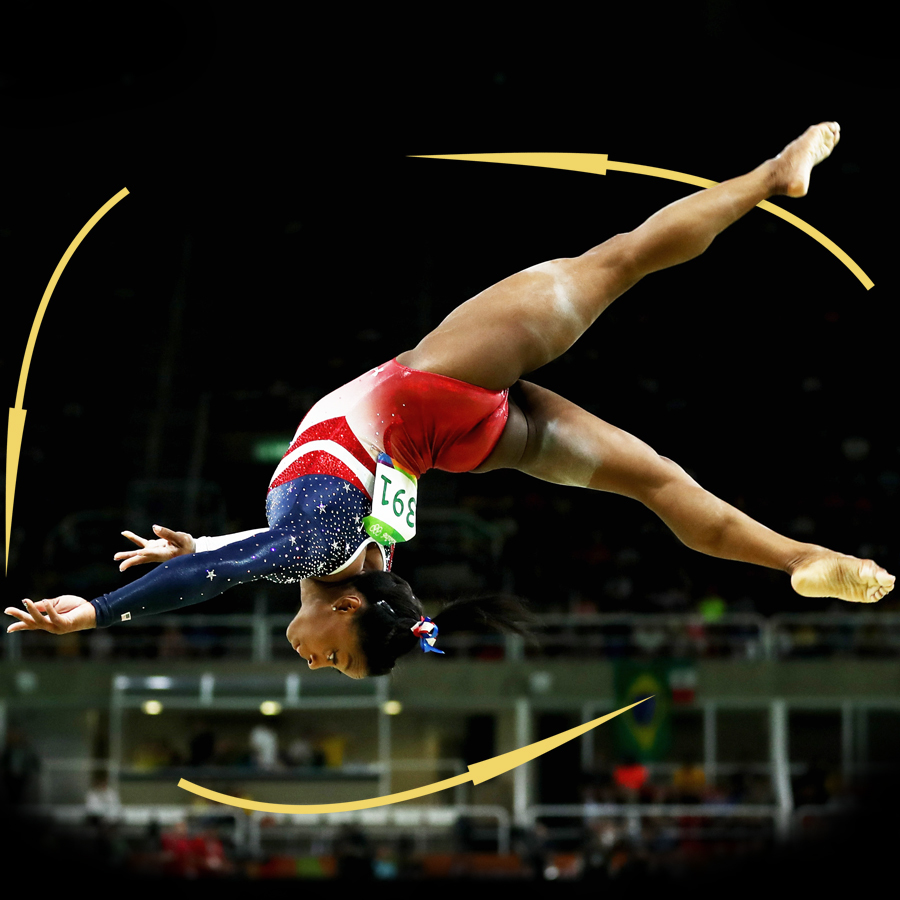
 496671335896555908-simone-biles-v2.jpg

But you will see this theme repeat itself in other geniuses too. Take Simone Biles for example. She has an air of effortless ease and nonchalance in her dazzling performances blending artistic beauty and athletic prowess in the grandest of stages and that disarming smile of pure joy she wears most of the time delights all. Great performances in sport and music or art have a way of creating a singularity in the time-space continuum. For a time, we are quiet and still within and everything appears just right even if there is noise all round, we live for such moments. But these great performances are built on the bedrock of blood, sweat and toil and most importantly intelligent practice. Simone Biles during routines at level higher with greater risk than what she performs in gymnastic competitions. Of course, she is way ahead of her competitors.

How can we apply, what we have just learned? Tweak your practice regimen. In any field, it is possible to make things harder. For example, if you are playing five-a side football, play five on four. But don’t make it too difficult that it is depressing. Don’t play five on one that will not get you anywhere. It is also important to enjoy the practice. Remember Don was just a kid having fun by himself alone in a field. And even though Simone Biles had to give up on her normal school life for home schooling to miss accommodate her practice regimen, she could do it because gymnastics was fun.

Choice is yours. Whether you want to be ordinary or extra-ordinary or legendary? You become what you place your focus on. You can choose to play at the same level as what is expected of you or play a game nobody has a chance of competing with you.


Don’t move where the puck is, Move where the puck will be.


Then may be one day, I get the privilege to write about you too, if I am up to it.


How to become a genius at work?

Bruce Lee - Flames - wallpaper

When you see a world class dancer or musician performing, a world class sportswoman producing a stunning shot at the last minute of the game? What do you think is common in these situations? Yes, they manifest genius in their work. Yes, what they produce seems incredulous or even miraculous to us. Yet, all they do is to bring their total awareness to their work in that moment. They just bring a meditative quality to their work. If for example, they are playing music, they become one with the music world. They become the player of the music, the music that goes out and also the listener of the music. This being the final stage of genius, there are several levels before that. Before, we learn about them, let us understand the impediments that could block us on this path.

In the Mahabharata, Dhronacharya was the royal teacher of the Kauravas and Pandavas. During a lesson of archery, the task was to hit the eye of the bird perched upon a tree. The teacher was standing beside the pupils and asking them what they saw, as they took aim. Some said they saw the wings of the bird, some said the leaves of the trees, others that they saw the sky beyond and the teacher was listening intently. Finally, it was the turn of Arjuna. He replied that he saw the eye of the bird and nothing else and of course, he hit the target. Metaphorically, the distractions that the other people saw could in the context of work relate to the pain, mistakes and memories of the past and the glories that await us in the future. Like Arjuna, we must quell all these distractions and focus solely only on the work at hand. Nothing else must be entertained in the mind’s eye. But that does not mean we must not recall the past events or think of the future but not while we are engaged in work. To further illustrate the point, I would like to put forth a quote by Rafael Nadal, the great tennis player “What I battle hardest to do in a tennis match is to quiet the voices in my head , to shut everything out of my mind but the contest itself and concentrate every atom of my being on the point I am playing. If I made a mistake on a previous point, forget it; should a thought of victory suggest itself, crush it.”

Now, let us discuss about the levels of concentration possible. James Allen beautifully describes that there are four levels: attention, contemplation, abstraction and activity of repose. In the first two levels, results are achieved but there is some friction associated with the work and the mind and work are not united. In the third stage, the senses are oblivious to the outside world and the mind is solely centered on the work. In the final stage, called activity in repose the greatest work is accomplished with minimum friction. In this final stage, there is complete marriage of the activities of the mind with the work performed. All men of genius and originality are men of abstraction and all the masters and leaders reach the final stage of concentration, activity in repose.

How do we get there? First thing, is to be aware that there are higher levels of concentration that we can aspire towards. We must practice day in and day out to raise the level of attention we apply to our work. But not in a forceful way but in a calm, imperturbable way. We must march on taking stock of the progress we make and not be disappointed when we don’t make progress. The goal we aspire for is so great that it is worth the wait.

Finally, to conclude I would like to finish with a quote by Bruce Lee. It not only sums up all that I wrote in this article but points to us that all Masters reach out to the same goal. To merge completely with their work.

“ A good martial artist does not become tense but ready. Not thinking, yet not dreaming. Ready for whatever may come. When the opponent expands, I contract and when he contracts I expand. And when there is an opportunity, “I” do not hit, “it” hits all by itself.”