Don’t Move Where the Puck is, Move Where the Puck will be- DON’s Style

The quote in the title is attributed to the famous ice hockey player Wayne Gretzky, who is considered as the greatest hockey player of all time by many sportswriters. He holds a small number of 60 National Hockey League records (as of 2014), even though he retired in 1999. In the book, Outliers: The Story of Success, Malcolm Gladwell makes an assertion that those individuals who attained legendary success in their vocation had a common link of having had to practice 10000 hours to hone their skills. This was consistent feature from Mozart, to the Beatles, to Bill Gates and certainly of those involved in professional sport of any kind. But is practice for a certain number of hours enough to achieve the superlative feats of a Michael Phelps or a Warren Buffett? What separates the good from the great and great from the legendary?

Enter the curious case of Sir Donald Bradman, a cricketer with a mindboggling batting average of 99.94 in Test Cricket. Why is this feat extraordinary? Because in roughly 140 years of professional cricket, the next best batsmen has an average close to 61. He is often touted as greatest sportsman of all time as the extent of his dominance and the longevity of his record is unique in all of sports. People have spent years trying to decode the secret to his success. But one aspect of his early training caught the eye of many. As a young boy, he invented a game in which he attempted to hit a golf ball with a cricket stump against a water tank in the yard at the back of the Bradman home. He wrote in his autobiography, Farewell to Cricket: “The golf ball came back at great speed and to hit it at all with the round stump was no easy task. This rather extraordinary and primitive idea was purely a matter of amusement, but looking back I can understand how it must have developed the co-ordination of brain, eye and muscle which was to serve me so well in important matches later on.”

In simple words, he had trained hundreds of hours playing a game much harder than cricket. The actual game was far easier for him than others.
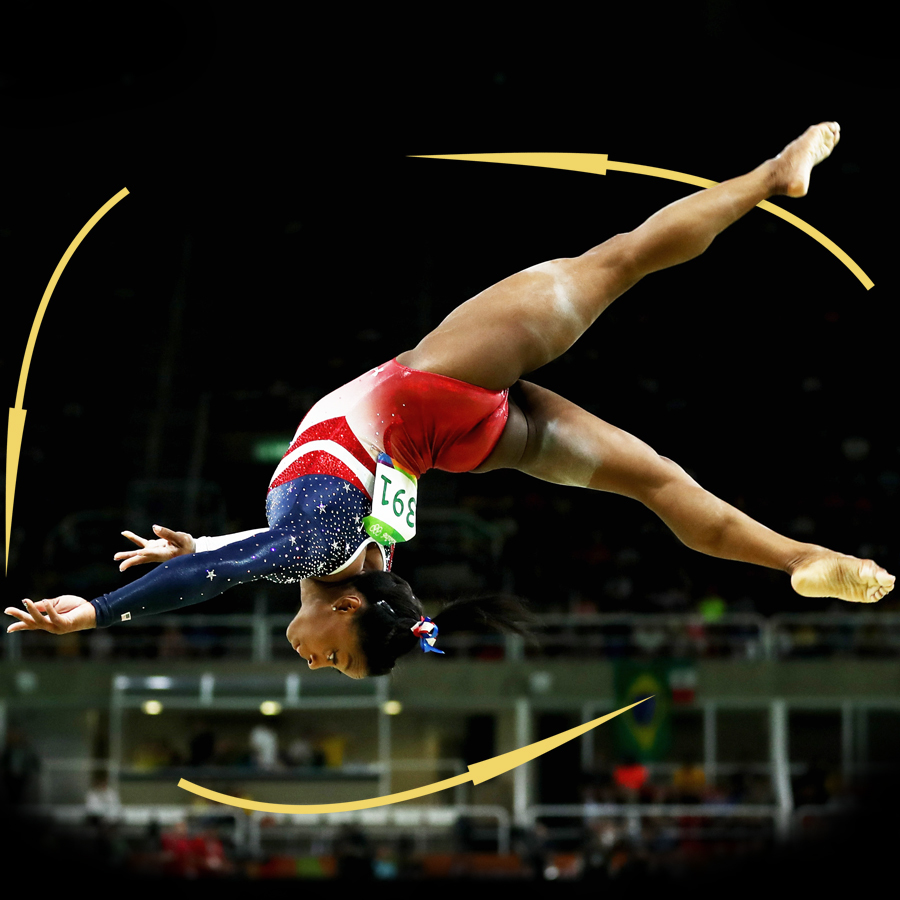
 496671335896555908-simone-biles-v2.jpg

But you will see this theme repeat itself in other geniuses too. Take Simone Biles for example. She has an air of effortless ease and nonchalance in her dazzling performances blending artistic beauty and athletic prowess in the grandest of stages and that disarming smile of pure joy she wears most of the time delights all. Great performances in sport and music or art have a way of creating a singularity in the time-space continuum. For a time, we are quiet and still within and everything appears just right even if there is noise all round, we live for such moments. But these great performances are built on the bedrock of blood, sweat and toil and most importantly intelligent practice. Simone Biles during routines at level higher with greater risk than what she performs in gymnastic competitions. Of course, she is way ahead of her competitors.

How can we apply, what we have just learned? Tweak your practice regimen. In any field, it is possible to make things harder. For example, if you are playing five-a side football, play five on four. But don’t make it too difficult that it is depressing. Don’t play five on one that will not get you anywhere. It is also important to enjoy the practice. Remember Don was just a kid having fun by himself alone in a field. And even though Simone Biles had to give up on her normal school life for home schooling to miss accommodate her practice regimen, she could do it because gymnastics was fun.

Choice is yours. Whether you want to be ordinary or extra-ordinary or legendary? You become what you place your focus on. You can choose to play at the same level as what is expected of you or play a game nobody has a chance of competing with you.


Don’t move where the puck is, Move where the puck will be.


Then may be one day, I get the privilege to write about you too, if I am up to it.


Every day is New Year’s Day, Every Night is Xmas Night

Mr. Floyd Bottomsup was teaching a history lesson  describing the accomplishments and adventures of Alexander the Great and his beloved horse Bucephalus to a class of 6th graders. Bottomsup  finishes the class stressing that if one has a dream and pursues it singlemindedly, each of the kids could achieve even greater things than Alexander and rewrite history. Next day,the teacher asked the kids if they had some questions about the previous lesson. One kid raises his hand and says that he rewrote history and he can show it his notebook. The teacher is pleasantly surprised calls him to come forth and show his notebook. The note reads:

Alexandria the Great was a teenage girl who rode a chocolate breathing Dragon. She used her dragon to fly around the world and produce magic sleeping gas from the dragon’s behind that puts the teachers to sleep. She fought for the freedom of kids to escape the boredom of the Classroom and play all day.

It was a tragic comedy or comic tragedy…Like LIFE.

Life is like La Choy SWEET and SOUR sauce….One cannot separate the COMEDY from the TRAGEDY or the SWEET from the SOUR. It is the same for everybody, whether you are Roger Federrer or Angela Merkel or the pizza delivery guy.

Jpeg

Yes, there are moments of inexpressible joy and happiness and then, there are periods of exasperating anguish and grief.  We all know how to handle the upward cycle of life. But how do we handle the downward cycle? By having the right perspective and not resisting the flow of life.

What is your age? Don’t answer that..What is the age of Universe?

13.8 billion years from current scientific estimates…that is 13800000000000 years


Where do we live?

08-28-11-hs-2014-27-a-xlarge_webImage from Hubble Space Telescope (bright spots represent galaxies)

Observable universe has about 1oo billion galaxies in the and our planet  is the 4th smallest planet of a very small solar system in the Milky Way Galaxy. Our sun is just one of the hundred billion stars in the Milky Way Galaxy.

1oo billion is 100000000000…there are more stars in the Milky Way then the grains of sand on Earth


Even the staunchest sceptic cannot but marvel at the immensity of space and the boundlessness of time. For life on Earth to flourish a unique set of conditions had to be met such as suitable distance from the Sun  and the amount of dark energy (something akin to anti-gravity) in our Universe  had to be of appropriate levels so that the Universe does not collapse within itself. If this does not sound like a miracle, I give you another example.

baby_growing

http://www.harunyahya.com/en/Books/988/the-miracle-of-human-creation/chapter/381

You…Your presence on Earth started with the perilous journey of about 300 million sperms of which finally only one sperm is able to fuse with the mother’s egg. The genetic information from these two cells is responsible for your uniqueness in the cosmos. The fascinating and mindboggling transformation of two cells to form into a human being with functional organs of ever increasing complexity such as brain, lungs and heart in 40 weeks is miracle as jaw-dropping as the Milky Way Galaxy. Just consider the brain which has a network of 100 billion neurons relaying information  at speeds of 270 miles per hour.

In Hindu mythology, Gods are described as merely rulers of one cycle of existence. Even Gods have to be born on Earth, to seek enlightenment and freedom. A human life is precious and valuable for we are as Gods born on Earth. We might be flawed Gods and we may fall due to our fears, greed and lust. No one is lost for ever. We have the potential to achieve greatness and handle the trials and tribulations of life with grace and poise. We come from the same stuff as stardust, black holes and supernovas. We come from infinity and go back to that infinity when our lives come to an end. Remember this next time you are down and out.

But lets not forget that human life is fragile. Our life can be snuffed out as easily as the light of a candle. Steve Jobs used to ask himself this question everyday:

“If today was the last day of my life, would I be doing what I am about to do today”.


Death can become a gift if we make it our best friend. Death is life’s transforming agent, a benediction in disguise.Acknowledging our own impermanence everyday will give us the strength to finally shed away our fears, prejudices and all narrow views like a snake casts off its skins. We, then become truly capable of following our higher calling and use our time wisely and cherish and treasure the relationships we are gifted with.

Then, indeed everyday is New Year’s day and every night is Christmas night. We all have a lot to be  grateful for the gift of one more day and experience the mystery and chaos of the macrocosm and microcosm.


How to become a genius at work?

Bruce Lee - Flames - wallpaper

When you see a world class dancer or musician performing, a world class sportswoman producing a stunning shot at the last minute of the game? What do you think is common in these situations? Yes, they manifest genius in their work. Yes, what they produce seems incredulous or even miraculous to us. Yet, all they do is to bring their total awareness to their work in that moment. They just bring a meditative quality to their work. If for example, they are playing music, they become one with the music world. They become the player of the music, the music that goes out and also the listener of the music. This being the final stage of genius, there are several levels before that. Before, we learn about them, let us understand the impediments that could block us on this path.

In the Mahabharata, Dhronacharya was the royal teacher of the Kauravas and Pandavas. During a lesson of archery, the task was to hit the eye of the bird perched upon a tree. The teacher was standing beside the pupils and asking them what they saw, as they took aim. Some said they saw the wings of the bird, some said the leaves of the trees, others that they saw the sky beyond and the teacher was listening intently. Finally, it was the turn of Arjuna. He replied that he saw the eye of the bird and nothing else and of course, he hit the target. Metaphorically, the distractions that the other people saw could in the context of work relate to the pain, mistakes and memories of the past and the glories that await us in the future. Like Arjuna, we must quell all these distractions and focus solely only on the work at hand. Nothing else must be entertained in the mind’s eye. But that does not mean we must not recall the past events or think of the future but not while we are engaged in work. To further illustrate the point, I would like to put forth a quote by Rafael Nadal, the great tennis player “What I battle hardest to do in a tennis match is to quiet the voices in my head , to shut everything out of my mind but the contest itself and concentrate every atom of my being on the point I am playing. If I made a mistake on a previous point, forget it; should a thought of victory suggest itself, crush it.”

Now, let us discuss about the levels of concentration possible. James Allen beautifully describes that there are four levels: attention, contemplation, abstraction and activity of repose. In the first two levels, results are achieved but there is some friction associated with the work and the mind and work are not united. In the third stage, the senses are oblivious to the outside world and the mind is solely centered on the work. In the final stage, called activity in repose the greatest work is accomplished with minimum friction. In this final stage, there is complete marriage of the activities of the mind with the work performed. All men of genius and originality are men of abstraction and all the masters and leaders reach the final stage of concentration, activity in repose.

How do we get there? First thing, is to be aware that there are higher levels of concentration that we can aspire towards. We must practice day in and day out to raise the level of attention we apply to our work. But not in a forceful way but in a calm, imperturbable way. We must march on taking stock of the progress we make and not be disappointed when we don’t make progress. The goal we aspire for is so great that it is worth the wait.

Finally, to conclude I would like to finish with a quote by Bruce Lee. It not only sums up all that I wrote in this article but points to us that all Masters reach out to the same goal. To merge completely with their work.

“ A good martial artist does not become tense but ready. Not thinking, yet not dreaming. Ready for whatever may come. When the opponent expands, I contract and when he contracts I expand. And when there is an opportunity, “I” do not hit, “it” hits all by itself.”

Why is the Buddha smiling ?

smilbudd

Our lives are filled with events and experiences. Some of these  bring us happiness and some sadness. There are periods of great turmoil, cycles of success, cycles of failure, periods of illness, periods of great vitality and excitement. Then there are events of great joy such as birth of a child or realization of a life long cherished dream. There are also dreams, which never get realized in our lifetime. We are tossed up and down in this sea of mundane existence. Yet the Buddha, who witnesses these same events, has a serene and beatific smile on his face at all times. Why is this so?

In a Buddha, the ego is completely annihilated. This false identity, the ego fools you into thinking that you are this fragile and puny body or the ever-oscillating monkey mind. The ego exaggerates the events in our life. If your husband or child dies or if a life-threatening disease like Cancer inflicts you, this event becomes the prism through which you view everything else in your life. Are we just a parent or a spouse or this body with a certain health condition? But ego likes to keep us small and loves to bind ourselves to misery. The truth is there are infinite aspects to our life and our real nature.

The Buddha lives in the here and now. You can live in London, Paris or Coimbatore. But all your life, the past and the future and all events happen in the ever present here and now. But our minds often take us either to past miseries or future glories, negating the most significant miraculous gift- here and now. The Buddha smiles because the possibilities and the beauty that the present moment holds thrill her. She tears up on the sight of a beautiful flower or the smile of a child. She is totally present to enjoy the glory of the present moment. So be present in the -here and now.

The Buddha lets go and doesn’t cling to anything. The Buddha knows that everything is impermanent. He knows that his children, wife, success, and social status everything will go one day. All things that have a form must die and wither away. This knowledge is deeply rooted in him and therefore, he doesn’t suffer. That doesn’t mean he doesn’t strive to achieve in life or that he doesn’t marry or have kids. He is detached towards all things and situations and can handle whatever comes his way in life with grace.

The Buddha does her work with great joy and lightness. There is no stress or tension involved. She does the best she can at each moment, holding the attention to only that moment. She is never in a hurry and is poised and relaxed in her actions. She is not greatly attached to the result of her actions. When you see a Buddha working, you will find that she dissolves into her work and is completely one with it. There is ease, grace and lightness in each of her actions. The work fills her with pure bliss.

The Buddha loves one and all. But this love doesn’t come from what religion propounds or from a belief fed to him by his ancestors or community. He can perceive a connection with all that is. To him oneness is a truth of his being. So he rejoices in the victory of others, as their victory is also his. He is saddened by their misfortunes. But his sadness is only because of his compassion to his fellow men. He is saddened that they are not yet free like him. He strives to free all and is willing to go any length to serve others. He manifests God on earth through his unselfishness and pure love.

The Buddha faces death fearlessly. To the Buddha, the knowledge that she is mortal is never forgotten. Having meditated on her own death, she sees it merely as just another door she has to walk through. She sees it as a benediction and a great adventure she has yet to experience. Death doesn’t make her tremble. She neither tries to avoid  or seek it. As calm as she faced life, she faces death and walks into it through the door of love and pure awreness. Having conquered both death and life, she is eternally free.

So the Buddha smiles. The symbol of the Buddha smiling is very powerful. It is also a symbol, which tells us that we can follow him. What is possible for one is possible for all. By regularly, mediating on his smile and let us ask ourselves why he is smiling. Let the ever graceful and compassionate master lead us to right knowledge and light and free us from the chains of darkness and ignorance which are mere illusions. Peace be to all.